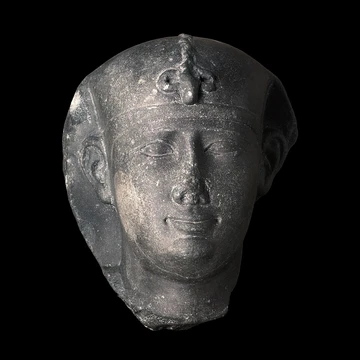
Khufu
Second pharaoh of the Fourth Dynasty, builder of the Great Pyramid.

Khufu, also known as Cheops, was the second pharaoh of the Fourth Dynasty of Egypt, reigning during the 26th century BC in the early Old Kingdom period. He is generally accepted as having commissioned the Great Pyramid of Giza, one of the Seven Wonders of the Ancient World, though many other aspects of his reign are poorly documented. Khufu is also the main character noted in the Westcar Papyrus from the 17th dynasty.
- Name
- Khufu (Cheops)
- Reign
- 26th century BC
- Dynasty
- Fourth Dynasty
- Known for
- Commissioning the Great Pyramid of Giza
- Legacy
- Conflicting; negative depictions by Manetho, Diodorus, and Herodotus
Lore & Background
Khufu succeeded his father, Sneferu, as king, and mainstream consensus holds that he was Sneferu's biological son, with no strong evidence to the contrary. The tomb of queen Hetepheres I, found east of Khufu's pyramid, contained inscriptions suggesting she was Khufu's mother, and she is generally accepted as Sneferu's wife and Khufu's mother, often titled 'king's wife' in inscriptions. Khufu's full name, Khnum-khufu, means 'Khnum protects me,' reflecting a connection to the god Khnum, and he used both this full version and a shorter form, Khufu, for unknown reasons. Khufu's reign length is unclear: the Royal Canon of Turin gives 23 years, while Herodotus and Manetho claim 50 and 63 years respectively, figures now considered exaggerated. The highest known date from his reign is a year 27 (or possibly 28) from the Diary of Merer. Political activities are sparsely documented, with his name appearing in inscriptions at Elkab, Elephantine, Hatnub, and Wadi Hammamat. Khufu's family was large, with multiple spouses, sons, daughters, and grandchildren listed in records. His eldest son, Kawab, likely died before Khufu, and Djedefre became the first throne successor, followed by Khafre.
Reader's Guide
Khufu's significance lies primarily in his commission of the Great Pyramid of Giza, the only surviving Wonder of the Ancient World, which has made him one of the most famous pharaohs despite the scarcity of contemporary records. His reign, though poorly documented, represents a peak of Old Kingdom pyramid-building and centralised state power. The conflicting legacy—positive cultural preservation during the Old and New Kingdoms versus negative characterisations by later historians such as Manetho, Diodorus, and Herodotus—illustrates how ancient sources shaped perceptions of pharaohs long after their deaths. Khufu's religious innovations, such as linking his name to the god Khnum, may reflect efforts to emphasise divine kingship. The uncertainty about his parentage and reign length underscores the challenges of reconstructing early Egyptian history from fragmentary evidence. His enduring fame, however, ensures continued scholarly and public interest in his life and monuments.
Did You Know?
- Khufu's full name, Khnum-khufu, means 'Khnum protects me,' linking him to the god of creation.
- Khufu is the main character in the Westcar Papyrus from the 17th dynasty.
- Ancient historians Manetho, Diodorus, and Herodotus handed down a very negative depiction of Khufu's character.
More in Ancient Egyptian Pharaohs 1-18
Spotted an error? Know more?
This is a living reference — every entry is fact-audited, and reader corrections feed straight into our audit queue. Suggest an edit · See this site's audit record