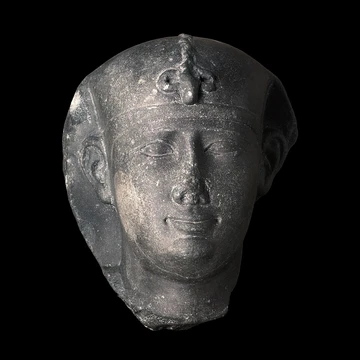
Menes
Pharaoh credited with unifying Upper and Lower Egypt.

Menes (fl. c. His identity is the subject of ongoing debate, with mainstream Egyptological consensus inconclusively identifying him with the Naqada III ruler Narmer or his successor, the First Dynasty pharaoh Hor-Aha.
- field
- Pharaoh, Early Dynastic Period
- nationality
- Ancient Egyptian
- known_for
- Uniting Upper and Lower Egypt; founder of the First Dynasty
Lore & Background
Menes is first documented in the work of Manetho, an Egyptian historian and priest of the Ptolemaic period, who noted the name in Greek as Μήνης. An alternative Greek form, Μιν, was cited by Herodotus, but this variant appears to be the result of contamination from the name of the god Min. The Egyptian form, mnj, is taken from the Turin and Abydos King Lists, dated to the Nineteenth Dynasty, and means 'He who endures'.
Reader's Guide
Menes was seen as a founding figure for much of the history of ancient Egypt, similar to Romulus in ancient Rome. Manetho records that Menes 'led the army across the frontier and won great glory'. Ancient tradition ascribes to him the unification of Upper and Lower Egypt into a single kingdom, and he appears in later king lists as the first human pharaoh. The lead archaeological reference to Menes is an ivory label from Naqada depicting the royal title Aha next to a building containing the title mn, generally taken to be Menes. A seal impression from Abydos alternates between a serekh of Narmer and the chessboard symbol 'mn', but opinions vary on whether this identifies Menes as Narmer or Hor-Aha. Diodorus Siculus stated that Menes introduced the worship of the gods and the practice of sacrifice, as well as a more luxurious style of living. According to Manetho, Menes reigned for either 30, 60 or 62 years and was killed by a hippopotamus.
Did You Know?
- The name Menes is first documented in the work of Manetho, an Egyptian historian of the Ptolemaic period.
- The Egyptian form mnj means 'He who endures'.
- According to Manetho, Menes was killed by a hippopotamus.
- Diodorus Siculus recorded a story of Menes fleeing across Lake Moeris on the back of a crocodile.
More in Ancient Egyptian Pharaohs 1-18
Spotted an error? Know more?
This is a living reference — every entry is fact-audited, and reader corrections feed straight into our audit queue. Suggest an edit · See this site's audit record