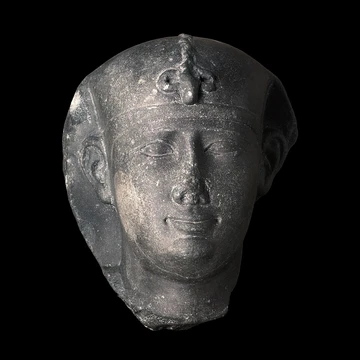
Neferhotep I
Pharaoh of the 13th Dynasty, apex of the dynasty.

Khasekhemre Neferhotep I was an Egyptian pharaoh of the mid Thirteenth Dynasty, ruling in the second half of the 18th century BC during a period variously classified as the late Middle Kingdom or early Second Intermediate Period. One of the best attested rulers of the 13th Dynasty, he reigned for 11 years according to the Turin King List. His reign, along with that of his brother and successor Sobekhotep IV, marks the apex of the 13th Dynasty.
- Dynasty
- 13th Dynasty
- Reign
- 11 years (Turin King List)
- Predecessor
- Sobekhotep III
- Successor
- Sobekhotep IV
- Family
- Grandson of a non-royal townsman; son of Haankhef and Kemi; brother of Sihathor
- Known for
- Best attested ruler of the 13th Dynasty; stela from Abydos recounting fashioning
Lore & Background
Neferhotep I came from a non-royal Theban family with a military background. His grandfather Nehy was an 'officer of a town regiment,' and his father Haankhef held the titles 'God's father' and 'royal sealer.' His mother Kemi was called 'king's mother,' indicating neither parent was of royal birth. Neferhotep's relation to his predecessor Sobekhotep III is unclear, and he may have usurped the throne. He and his successors notably proclaimed their non-royal origins on stelae and scarab seals, possibly to dissociate themselves from earlier kings. Little is known of Neferhotep's activities during his decade-long reign. The most important surviving document is a stela from Abydos recounting the fashioning of an image of Osiris and Neferhotep's determination that it be made 'as instructed by the gods at the beginning of time.' He undertook building works in Karnak, evidenced by a pedestal and naos discovered there. Towards the end of his reign, he shared the throne with his brother Sihathor as coregent for a few months to a year. Sihathor died shortly before Neferhotep, who then probably appointed another brother, Sobekhotep IV, as coregent. Sobekhotep IV succeeded Neferhotep and reigned for almost a decade.
Reader's Guide
Neferhotep I is significant as one of the best attested rulers of the 13th Dynasty, a period of political fragmentation and transition between the Middle Kingdom and Second Intermediate Period. His reign, along with that of his brother Sobekhotep IV, marks the apex of the dynasty. The large number of artifacts bearing his name—over 60 scarab seals, cylinder seals, statues, rock inscriptions, and stelae—found from Byblos to Lower Nubia indicates that he maintained trade relations and some degree of control over a wide area, though the extent of his rule is debated. Some scholars believe the Canaanite 14th Dynasty already controlled the Eastern Nile Delta, which would explain the single attestation of Neferhotep in Lower Egypt. Others argue he reigned over the whole of Egypt. His non-royal origins, openly proclaimed, challenge traditional Egyptian kingship ideology and may reflect a deliberate break with his immediate predecessors. The Turin King List's rare inclusion of his father's name underscores the unusual nature of his rise to power. Neferhotep's legacy is thus tied to both the material evidence of his rule and the historiographical questions it raises about legitimacy and territorial control during a poorly understood era.
Did You Know?
- Neferhotep I's father Haankhef is one of only two non-royal individuals named in the Turin King List, the other being the father of Sobekhotep II.
- The Turin King List credits Neferhotep I with a reign of 11 years and 1 to 4 months, the second or third longest of the 13th Dynasty after Merneferre Ay (23 years) and Sobekhotep IV (9–12 years).
- Neferhotep I was likely contemporaneous with kings Zimri-Lim of Mari and Hammurabi of Babylon.
- A stela from Abydos records Neferhotep's determination that an image of Osiris be made 'as instructed by the gods at the beginning of time.'
- Neferhotep I shared the throne with his brother Sihathor as coregent for a few months to a year before Sihathor died.
A Theban Family's Ascent to the Throne
Neferhotep I's path to the pharaonic throne was anything but conventional. His grandfather Nehy held the modest title of 'officer of a town regiment' in Thebes, married to a woman named Senebtysy who bore only the common designation 'lady of the house.' Their sole known son, Haankhef, rose to the titles 'God's father' and 'royal sealer,' and married Kemi, who is recorded as 'king's mother.' Scarab seals from El-Lahun and the Turin canon both explicitly confirm Haankhef as Neferhotep's father—an extraordinary inclusion, since the Turin canon typically lists only pharaohs and excludes non-royal individuals from its entries. The only other such exception in the entire document is the father of Sobekhotep II. Egyptologists including Kim Ryholt and Darrell Baker conclude that Neferhotep was of non-royal birth and likely usurped the throne from his predecessor Sobekhotep III. The military background of his Theban family may well have played a role in enabling this dramatic and unconventional seizure of power.
A Reign Scattered Across Egypt and Beyond
Despite ruling for eleven years and one to four months according to the Turin canon, Neferhotep I left a surprisingly wide geographic footprint. His name appears on more than sixty scarab seals, two cylinder-seals, a statue from Elephantine, and eleven rock inscriptions at sites including Wadi el Shatt el-Rigal, Sehel Island, Konosso, and Philae. Attestations stretch from Byblos in the north to the Nubian fortresses of Buhen and Mirgissa in the south, with a single scarab from Tell el-Yahudiya in Lower Egypt. Two stelae from Abydos survive, one of which was usurped from the much earlier king Wegaf and forbids tomb construction along the sacred processional way of Wepwawet. At Karnak, two naoses each housing a statue of the king were discovered, alongside a pedestal bearing the cartouches of both Neferhotep and his successor Sobekhotep IV. In the Faiyum, a small statuette dedicated to Sobek and Horus of Shedet now sits in the Archaeological Museum of Bologna.
Brothers, Coregents, and the Dynasty's Zenith
The final chapter of Neferhotep I's reign was marked by a remarkable family arrangement. Towards the end of his rule, he shared the throne with his brother Sihathor in a coregency lasting somewhere between a few months and a year. Sihathor died shortly before Neferhotep, who then likely appointed yet another brother, Sobekhotep IV, as coregent. Sobekhotep IV went on to rule for nearly a decade, and the combined reigns of the two brothers represent what scholars regard as the apex of the Thirteenth Dynasty. Despite having at least two children of his own—Haankhef and Kemi, named after his parents, born to a woman called Senebsen, and possibly a son named Wahneferhotep—Neferhotep chose his brothers as successors rather than his offspring. Sobekhotep IV, who was born in Thebes as he proudly declared on a stela at Karnak, continued the dynasty's momentum in a period that scholars variously label the late Middle Kingdom or the early Second Intermediate Period.
Defying Convention in a Fragmented Age
Neferhotep I lived during a turbulent transitional era, contemporaneous with the great kings Zimri-Lim of Mari and Hammurabi of Babylon, yet his own reign remains one of the better-attested of the Thirteenth Dynasty. What makes his legacy particularly striking is the deliberate, public proclamation of his non-royal origins. Rather than concealing his Theban, military-family background, Neferhotep—along with his predecessor Sobekhotep III and successor Sobekhotep IV—openly declared it on stelae and scarab seals. This ran directly counter to the traditional Egyptian system in which a new king's legitimacy rested primarily on royal filiation. Egyptologists speculate that these bold declarations may have been a strategy to distance themselves from their immediate predecessors, particularly Seth Meribre, whose monuments were usurped and defaced. The precise motivation remains unknown, but the practice stands as a remarkable departure from centuries of royal convention and offers a rare window into the political anxieties of a fragmented Egypt.
More in Ancient Egyptian Pharaohs 1-18
Spotted an error? Know more?
This is a living reference — every entry is fact-audited, and reader corrections feed straight into our audit queue. Suggest an edit · See this site's audit record