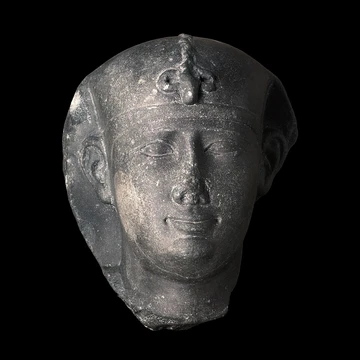
Pepi II Neferkare
King of Egypt's Sixth Dynasty whose reign saw the Old Kingdom's decline.

Pepi II Neferkare (c. 2284 BC – c. 2214 BC) was a king of the Sixth Dynasty in Egypt's Old Kingdom. His second name, Neferkare (Nefer-ka-Re), means "Beautiful is the Ka of Re". He succeeded to the throne at age six, after the death of Nemtyemsaf I. His reign marked a sharp decline of the Old Kingdom, as the power of the nomarchs grew and the king's power declined. With no dominant central power, local nobles began raiding each other's territories, and the Old Kingdom came to an end within a couple of years after the end of Pepi II's reign, leading to the First Intermediate Period.
- born
- c. 2284 BC
- died
- c. 2214 BC
- field
- Pharaoh of Egypt
- nationality
- Egyptian
- known_for
- Long reign (possibly 90+ years); decline of the Old Kingdom; correspondence with
Lore & Background
Pepi II was likely the son of Merenre Nemtyemsaf I and Queen Ankhesenpepi II, based on 1999–2000 excavations at Saqqara that found royal seals and stone blocks in her funerary temple giving her the titles "King's Wife of the Pyramid of Pepy I, King's Wife of the Pyramid of Merenre, King's Mother of the Pyramid of Pepy II". His mother most likely ruled as regent in his early years, possibly helped by her brother Djau, a vizier under the previous pharaoh. An alabaster statuette in the Brooklyn Museum depicts a young Pepi II in full kingly regalia sitting on his mother's lap. A letter he wrote as a child to Harkhuf, a governor of Aswan, survives as a lengthy inscription on Harkhuf's tomb: the young king excitedly promised great rewards if a pygmy captured in Nubia were brought back alive to serve as an entertainer. Over his long life, Pepi II had several wives including Neith, Iput II, Ankhesenpepi III, Ankhesenpepi IV, Udjebten, and Meritites IV. Queens Neith, Iput, and Udjebten each had their own minor pyramids and mortuary temples as part of the king's pyramid complex in Saqqara. His children included Nemtyemsaf II (possibly with Neith) and Neferkare (with Ankhesenpepi IV), though which Neferkare is unknown. Foreign policy continued trade and mining at Wadi Maghareh in Sinai, Hatnub for alabaster, and caravans trading with Nubia for incense, ebony, animal skins, and ivory. An alabaster lid was found at Ebla in the destruction layer of Mardikh IIB1.
Reader's Guide
Pepi II's reign is significant primarily for the sharp decline of the Old Kingdom. As the power of nomarchs grew, the king's central authority weakened, leading to local nobles raiding each other's territories. The Old Kingdom ended within a couple of years after his death, ushering in the First Intermediate Period from the Seventh Dynasty to the 10th Dynasty. His reign length is a major point of debate: Manetho (4th century BC) claimed 94 years, and the Turin King List (13th century BC) gave 90+ years, but the latest contemporary documentary evidence dates only to his 62nd year of reign. Some Egyptologists therefore suggest he reigned no more than 64 years, based on the absence of higher attested dates beyond his Year after the 31st Count (Year 62 on a biannual cattle count). The tale of 'King Neferkare and General Sasenet' may refer to him, though some scholars think it is a work of archaizing literature from the 25th Dynasty referring to Shabaka Neferkare. His reign also saw a decentralization of power, with the vizier role split into two: one for Upper Egypt and one for Lower Egypt, and the southern vizier was based at Thebes.
Did You Know?
- Pepi II succeeded to the throne at age six after the death of Nemtyemsaf I.
- His mother Ankhesenpepi II most likely ruled as regent in his early years, possibly helped by her brother Djau.
- A letter from the young Pepi II to governor Harkhuf promised great rewards if a pygmy captured in Nubia were brought back alive.
- The latest contemporary documentary evidence for Pepi II dates from his 62nd year of reign, making the 90+ year claims questionable.
- The tale of 'King Neferkare and General Sasenet' may refer to Pepi II, but some scholars think it refers to Shabaka Neferkare of the 25th Dynasty.
More in Ancient Egyptian Pharaohs 1-18
Spotted an error? Know more?
This is a living reference — every entry is fact-audited, and reader corrections feed straight into our audit queue. Suggest an edit · See this site's audit record