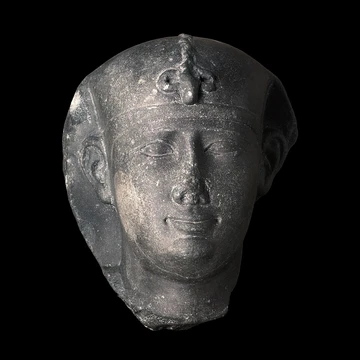
Ptolemy III Euergetes
Third pharaoh of Ptolemaic Egypt, reached peak of power.

Ptolemy III Euergetes (c. 280 – November/December 222 BC) was the third pharaoh of the Ptolemaic dynasty in Egypt, reigning from 246 to 222 BC. His kingship marked the height of Ptolemaic military and economic power, building on the foundations laid by his father Ptolemy II Philadelphus. He is known for his successful but ultimately curtailed invasion of the Seleucid empire during the Third Syrian War and for forging closer ties with the Egyptian priestly elite through the Canopus decree.
- born
- c. 280 BC
- died
- November/December 222 BC
- known_for
- Third Syrian War, Canopus decree, height of Ptolemaic power
Lore & Background
Ptolemy III was the eldest son of Ptolemy II and Arsinoe I. After his mother was disgraced and exiled to Coptos, he and his siblings were removed from the succession. He was possibly raised on Thera, where his tutors included the poet and polymath Apollonius of Rhodes. He was restored as heir in the late 250s BC, when his father arranged his engagement to Berenice of Cyrene. He succeeded his father without issue on 28 January 246 BC. Upon accession, he married Berenice II, reigning queen of Cyrenaica, forcefully reasserting Ptolemaic authority and unifying the region's cities under a League. In the Third Syrian War (246–241 BC), he invaded the Seleucid empire, capturing Seleucia and Antioch without a fight in late autumn 246 BC, then conquering Babylon. He may have been crowned 'Great King' of Asia. However, he discovered his sister Berenice and her infant son had been murdered. He was forced to abandon the campaign due to a revolt in Egypt, which he quickly contained. After suppressing the rebellion, he issued the Canopus decree in 238 BC, codifying a closer bond with the Egyptian priesthood. In the Aegean, his fleet was defeated at the Battle of Andros around 245 BC, but he continued to offer financial support to opponents of the Antigonids in mainland Greece, including Antiochus Hierax.
Reader's Guide
Ptolemy III Euergetes is significant for overseeing the zenith of Ptolemaic power, both militarily and economically. His invasion of the Seleucid empire nearly resulted in total victory—he conquered Babylon and established a governor 'on the other side' of the Euphrates—but a native Egyptian uprising forced him to withdraw, marking the first of a series of such revolts that would trouble Egypt for the next century. His response—forging a closer alliance with the Egyptian priestly elite, codified in the Canopus decree of 238 BC—set a trend for Ptolemaic rule in Egypt for the rest of the dynasty. His marriage to Berenice II unified Cyrenaica with Egypt, and he established two new port cities named Ptolemais and Berenice. His patronage of Greek opponents of the Antigonids maintained Ptolemaic influence in the Aegean despite naval defeat at Andros. His legacy includes the exaggeration of his conquests in official propaganda, like the Adulis inscription claiming Bactria, and his incorporation into the state cult as a 'Benefactor God' (Theoi Euergetai) at the new year in 243 BC, in honor of his restoration of statues seized by the Persians.
Did You Know?
- Ptolemy III was possibly raised on Thera in the Aegean, not in Egypt, after his mother was disgraced.
- His tutor was the poet and polymath Apollonius of Rhodes, later head of the Library of Alexandria.
- He conquered Babylon at the end of 246 or beginning of 245 BC and may have been crowned 'Great King' of Asia.
- The revolt that forced him to abandon his campaign may have been linked to a volcanic eruption in 247 BC that changed monsoon patterns and caused famine.
- He and his wife Berenice II were worshipped as the Theoi Euergetai ('Benefactor Gods') from 243 BC.
More in Ancient Egyptian Pharaohs 1-18
Related in Ancient Egyptian Pharaohs
Links follow this subject's own source article.
Spotted an error? Know more?
This is a living reference — every entry is fact-audited, and reader corrections feed straight into our audit queue. Suggest an edit · See this site's audit record