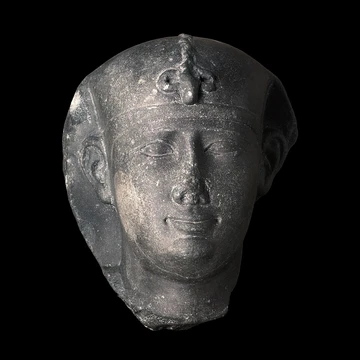
Ptolemy I Soter
Macedonian general who founded the Ptolemaic dynasty in Egypt.

Ptolemy I Soter (c. 369/68 BC – January 282 BC) was a Macedonian Greek general, historian, and successor of Alexander the Great who founded the Ptolemaic Kingdom centered in Egypt. He served as king and pharaoh of Ptolemaic Egypt from 305/304 BC until his death, and his descendants continued to rule Egypt until 30 BC. Under his leadership, Egypt became a thriving bastion of Hellenistic civilization, and Alexandria grew into a great seat of Greek culture.
- born
- c. 369/68 BC
- died
- January 282 BC
- nationality
- Macedonian Greek
- known_for
- Founding the Ptolemaic Kingdom; commanding construction of the Library of Alexan
Lore & Background
Ptolemy was the son of Arsinoe of Macedon by her husband Lagus. He served with Alexander the Great from his first campaigns, was among his seven somatophylakes (bodyguards), and played a principal part in later campaigns in Afghanistan and India. After Alexander's death in 323 BC, Ptolemy retrieved his body en route to Macedon, placing it in Memphis and later moving it to Alexandria. He joined a coalition against Perdiccas, the royal regent, and after Perdiccas invaded Egypt and was assassinated by his own officers in 320 BC, Ptolemy consolidated control over the country. Ptolemy engaged in a series of wars among Alexander's successors, gaining a claim to Judea in southern Syria, which was disputed with Seleucus I. He also took control of Cyprus and Cyrenaica, the latter placed under his stepson Magas. He commanded the construction of the Library of Alexandria and of the Lighthouse of Alexandria, one of the Seven Wonders of the Ancient World. Ptolemy married several times: possibly Thaïs, then the Persian noblewoman Artakama on Alexander's orders, later Eurydice (daughter of Antipater), and finally Berenice I. He was succeeded by his son with Berenice, Ptolemy II.
Reader's Guide
Ptolemy I Soter's significance lies in his founding of the Ptolemaic Kingdom, which endured for nearly three centuries and became a major center of Hellenistic culture. By securing Egypt as his power base and avoiding overreach, he established a stable dynasty that fostered the growth of Alexandria as a hub of learning and commerce. His construction of the Library and Lighthouse of Alexandria symbolized this cultural flourishing. His military and diplomatic maneuvers, including the retrieval of Alexander's body and his role in the wars of the Diadochi, shaped the political landscape of the eastern Mediterranean. The long-standing conflict over southern Syria between the Ptolemaic and Seleucid dynasties originated from his actions. His legacy includes the preservation and spread of Greek culture in Egypt, influencing subsequent history until the Roman conquest.
Did You Know?
- Ptolemy I was one of Alexander the Great's seven somatophylakes (bodyguards).
- He retrieved Alexander's body from Syria and initially placed it in Memphis before it was moved to Alexandria.
- Ptolemy commanded the construction of the Lighthouse of Alexandria, one of the Seven Wonders of the Ancient World.
- He declined the regency of the empire after Perdiccas was assassinated in 320 BC.
- Ptolemy's son with Berenice I, Ptolemy II, succeeded him as ruler of Egypt.
More in Ancient Egyptian Pharaohs 1-18
Related in Ancient Egyptian Pharaohs
Links follow this subject's own source article.
Spotted an error? Know more?
This is a living reference — every entry is fact-audited, and reader corrections feed straight into our audit queue. Suggest an edit · See this site's audit record