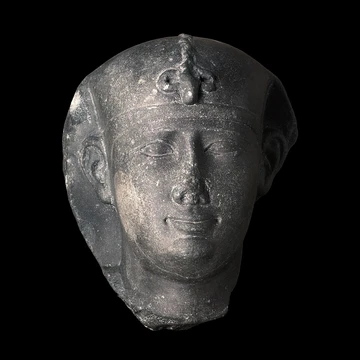
Ramesses VI
Fifth ruler of Egypt's Twentieth Dynasty, reigned mid-to-late 12th century BC.

Ramesses VI Nebmaatre-Meryamun, also known as Ramses or Rameses and under his princely name Amenherkhepshef C, was the fifth ruler of the Twentieth Dynasty of Egypt. He reigned for about eight years in the mid-to-late 12th century BC, a period marked by economic strain and the loss of Egyptian territories in Canaan. He is notable for usurping and enlarging the tomb of his predecessor, KV9, and for the accidental preservation of Tutankhamun's tomb by the huts built over its entrance.
- field
- Pharaoh of Egypt
- nationality
- Egyptian
- known for
- Usurping KV9; preserving Tutankhamun's tomb; loss of Canaanite strongholds
Lore & Background
As a prince, he held the titles of royal scribe and cavalry general. He ascended the throne after the death of his nephew Ramesses V, whom he buried in an unknown tomb in the Theban necropolis. In his first two years, he stopped raids by Libyan or Egyptian marauders in Upper Egypt. He usurped KV9, a tomb planned for Ramesses V, enlarging and redecorating it for himself. The craftsmen's huts near its entrance covered Tutankhamun's tomb, protecting it from a wave of robberies within 20 years of Ramesses VI's death. He may have planned six more tombs in the Valley of the Queens, none known today.
Reader's Guide
Ramesses VI's reign occurred during a period of decline for Egypt. The loss of the last strongholds in Canaan strained the economy and increased prices, while construction projects became hard to fund. He responded by usurping monuments of his forefathers, engraving his cartouches over theirs, and boasting of covering the land with great monuments. He was fond of cult statues of himself; more are known for him than for any Twentieth-Dynasty king after Ramesses III. It is now kept in the National Museum of Egyptian Civilization.
Did You Know?
- Ramesses VI was a son of Ramesses III and queen Iset Ta-Hemdjert.
- He ascended the throne after the death of his nephew Ramesses V.
- The craftsmen's huts near KV9 covered Tutankhamun's tomb, protecting it from robberies within 20 years of Ramesses VI's death.
- More cult statues of Ramesses VI are known than for any Twentieth-Dynasty king after Ramesses III.
More in Ancient Egyptian Pharaohs 1-18
Spotted an error? Know more?
This is a living reference — every entry is fact-audited, and reader corrections feed straight into our audit queue. Suggest an edit · See this site's audit record