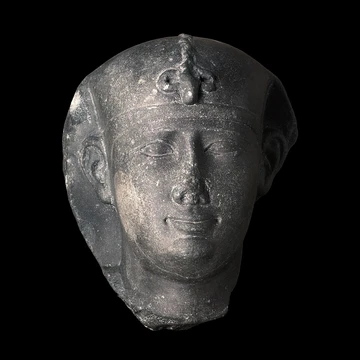
Ramesses III
Last powerful pharaoh of the New Kingdom, defeated the Sea Peoples.

Usermaatre Meryamun Ramesses III was the second Pharaoh of the Twentieth Dynasty in Ancient Egypt. Some scholars date his reign from 26 March 1185 to 15 April 1154 BC, and he is considered to be the last pharaoh of the New Kingdom to have wielded substantial power. His long reign saw the decline of Egyptian political and economic power, linked to a series of invasions and internal economic problems. The defensive strategy of Ramesses III was able to slow down Egypt's decline, though it meant that his successors had a weaker military.
- Reign
- c. 1185–1154 BC (disputed: some scholars date 1187–1156 BC)
- Dynasty
- Twentieth Dynasty
- Known for
- Defeating the Sea Peoples; constructing Medinet Habu; last powerful New Kingdom
- Assassination
- 1155 BC in the Harem conspiracy
Lore & Background
Ramesses III was the son of Setnakhte and Tiy-Merenese, who wrote her name in a cartouche. Setnakhte's origin is unknown; he seized the throne during a time of crisis and political unrest likely from Twosret, and was presumably a minor descendant of Ramesses II through a separate family line. Ramesses III is believed to have reigned from March 1185 to April 1154 BC, based on his accession date of I Shemu day 26 and his death on Year 32 III Shemu day 15. Some scholars estimate a reign of 31 years, 1 month and 19 days. In Year 8 of his reign, the Sea Peoples—including Peleset, Denyen, Shardana, Meshwesh of the sea, and Tjekker—invaded Egypt by land and sea. Ramesses III defeated them in two great battles: first on land at the Battle of Djahy on Egypt's easternmost frontier in Djahy or modern-day southern Lebanon, and then at the Battle of the Delta, where he enticed the Sea Peoples into the mouth of the Nile and ambushed them with archers and grappling hooks. The Harris Papyrus states: 'As for those who reached my frontier, their seed is not, their heart and their soul are finished forever and ever.' He also fought invading Libyan tribesmen in two major campaigns in Egypt's Western Delta in his Year 5 and Year 11. The heavy cost of these battles slowly exhausted Egypt's treasury. The first known labour strike in recorded history occurred during Year 29 of his reign, when food rations for the royal tomb-builders at Deir el-Medina could not be provisioned. Something in the air (possibly the Hekla 3 eruption) prevented much sunlight and arrested global tree growth for almost two full decades until 1140 BC, substantially increasing grain prices under later reigns. Ramesses III constructed one of the largest mortuary temples of western Thebes, now called Medinet Habu, which was enclosed by massive fortifications—no temple in the heart of Egypt prior to his reign had ever needed such protection. He was assassinated in the Harem conspiracy led by his secondary wife Tiye and her eldest son Pentawere. The conspiracy was discovered through papyrus trial transcripts; 38 people were sentenced to death, and some condemned were given the option of committing suicide. Ramesses III died in his 32nd year before the summaries of the sentences were composed. He was succeeded by his son and designated successor Ramesses IV.
Reader's Guide
Ramesses III is the last pharaoh of the New Kingdom to have wielded substantial power. His reign is defined by defensive wars against the Sea Peoples and Libyan tribesmen, which slowed Egypt's decline but exhausted the treasury and weakened the military for his successors. The construction of Medinet Habu—one of the largest mortuary temples, heavily fortified—reflects the insecurity of the era. The first recorded labour strike in Year 29, caused by food ration shortages, and a volcanic cooling event (possibly Hekla 3) that raised grain prices, show the economic turmoil. His assassination in the Harem conspiracy, led by Queen Tiye and her son Pentawere, triggered a succession crisis that further accelerated Egypt's decline. Ramesses IV succeeded him, though many of his other sons would rule later.
Did You Know?
- Ramesses III's reign saw the first recorded labour strike in history, in Year 29, when food rations for the royal tomb-builders at Deir el-Medina could not be provisioned.
- The Harris Papyrus records that after the Battle of the Delta, the Sea Peoples' 'seed is not, their heart and their soul are finished forever and ever.'
- Ramesses III was assassinated in the Harem conspiracy, led by his secondary wife Tiye and her son Pentawere; 38 people were sentenced to death.
- His mortuary temple at Medinet Habu was so heavily fortified that no temple in the heart of Egypt before his reign had ever needed such protection.
- In April 2025, a hieroglyphic inscription bearing Ramesses III's royal cartouche was discovered in the Wadi Rum Reserve in southern Jordan, proving his influence in the southern Levant and Arabian Peninsula.
More in Ancient Egyptian Pharaohs 1-18
Spotted an error? Know more?
This is a living reference — every entry is fact-audited, and reader corrections feed straight into our audit queue. Suggest an edit · See this site's audit record